What Does it Take to Run 500kms?
A conversation with Tom Leeming who photographed and crewed for Imo Boddy as she broke the female Speed Project (LA to Las Vegas) record.

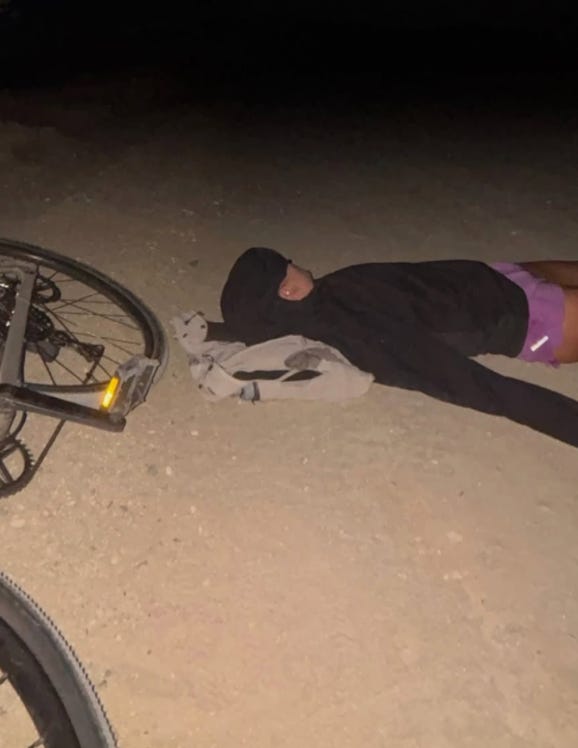
Somewhere in the Mojave Desert, with nothing around but the hum of power lines, Imogen (Imo) Boddy lay down in the dirt and asked Tom Leeming to wake her up in three minutes. She had been running for days at that point, and although she was exhausted, she had many kilometres to go.
Imo, alongside a handful of runners, was trying to complete The Speed Project (TSP). A race that covers the sandy and hot 500km stretch from Los Angeles to Las Vegas. The race, created by Nils Arend1 and Blue Benadum in March of 2013, has slowly gained momentum and notoriety for bringing a unique blend of creativity, ambition, speed, and endurance. Originally, it was done exclusively in teams, but in the last couple of years, the Solo category has also been included. There are no rules and no spectators; runners are responsible for organising their crews, food, and itinerary, and unlike every other race, there is no clear path, but rather the challenge of creating one best suited to the runner(s).
The original route taken by Benadum, Arend, and friends goes through Hollywood and Antelope Valley, passing through the edge of the Mojave Desert and along the edge of the Death Valley National Park. Then, through the Old Spanish Trail and Route 160 to Las Vegas. Since then, many runners have opted for a shortcut. The Powerline route2 cuts through the desert saving some kilometres, but putting participants through what many describe as the worst part of the race. The hilly terrain, extreme heat, constant buzz from the electricity that runs between pylons, and lack of support due to the need for specialised vehicles, make the 80-100km stretch gruelling.
With running facing a boom, more eyes have turned towards the race. After all, a distance like that is daunting to everyone, but perhaps more so to those who know what running 21 or 42 kms feels like, and yet ultra runners are increasingly excited to compete. True to its DIY nature, TSP works in the form of an invitation; there is no website, no clear sign-up process, and although now there is an application form, the spots are still incredibly limited. I followed along this year through the runners’ Instagram pages, where their dedicated teams kept followers updated on the situation and progress.
It is there that I stumbled upon Tom Leeming’s photos. He was part of the race in Imo Boddy’s crew, where, aside from photographing and documenting, he played a strong part in assisting, accompanying, and supporting Imo, who unexpectedly but spectacularly finished the race in second place, reaching Las Vegas in 77 hours and 54 minutes, beating the female solo record.
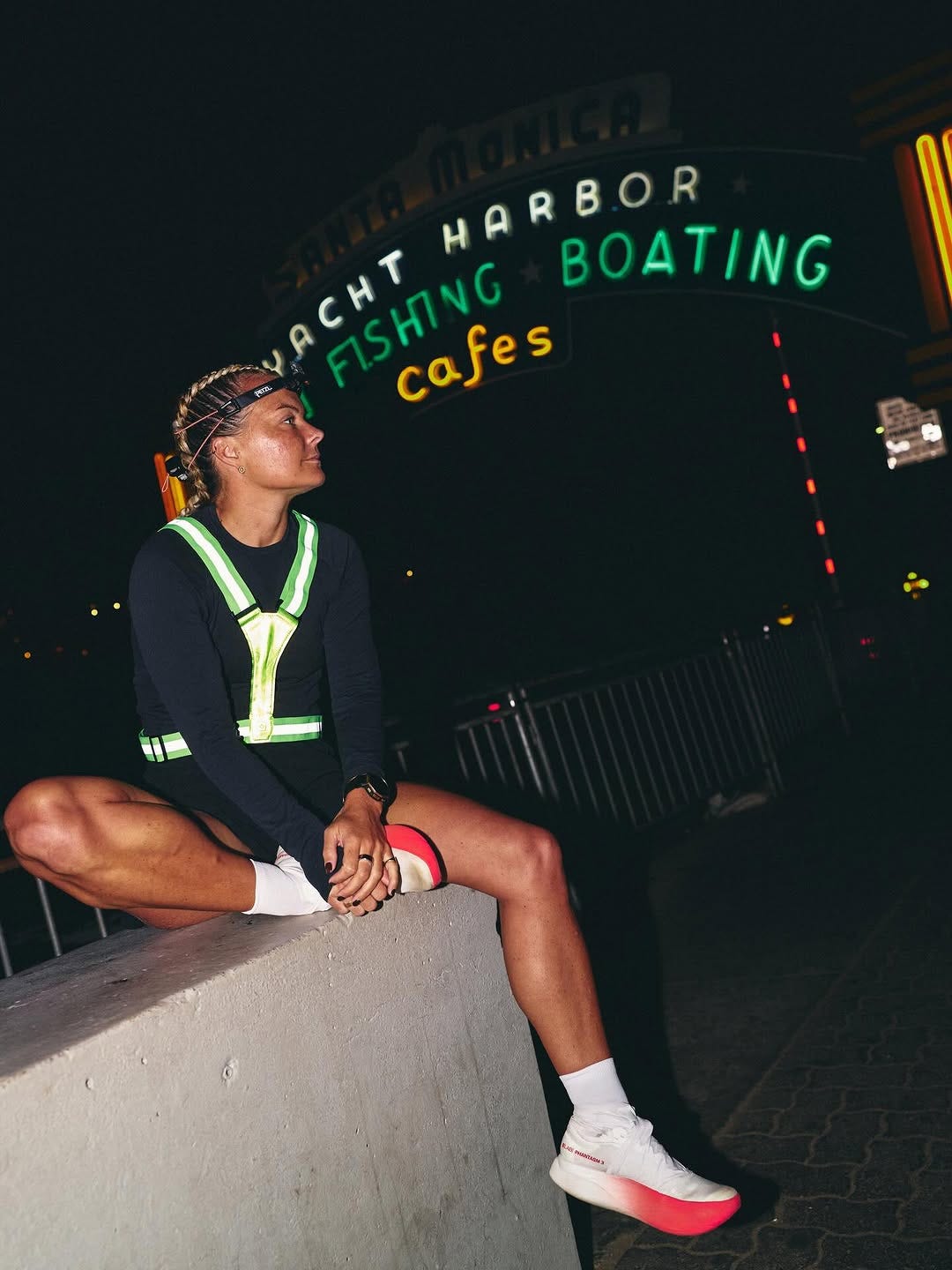
Tom, who studied fine art at Goldsmith University in London, got his start in the sports photography world through his involvement in CrossFit, and later found that following and photographing ultra running speaks to him as it’s documenting people “pushing themselves as much as they can, and for the most part doing it for the right reasons.”
He met Imo at a run club in Battersea Park in London, after she had completed 7 Marathons in 7 Days, advocating for mental health and raising £25,000 for Mind Charity. The first photos Tom took of Imo running were on film, blurry and vague, but he used it as an opportunity to “learn backwards,” printing and processing the film himself, to get better.
Since then, the two started dating, and Imo broke the time record on JOGLE, running the length of Britain in 22 days, as well as on Three Peaks, climbing the highest mountains in Scotland, England, and Wales, covering 680 km in just over six days. The Speed Project was a challenge that came off the back of 2025, which was a tough racing year, and was meant as an exercise in re-finding her love for running, and to prove to herself that she could dig deep and push through.
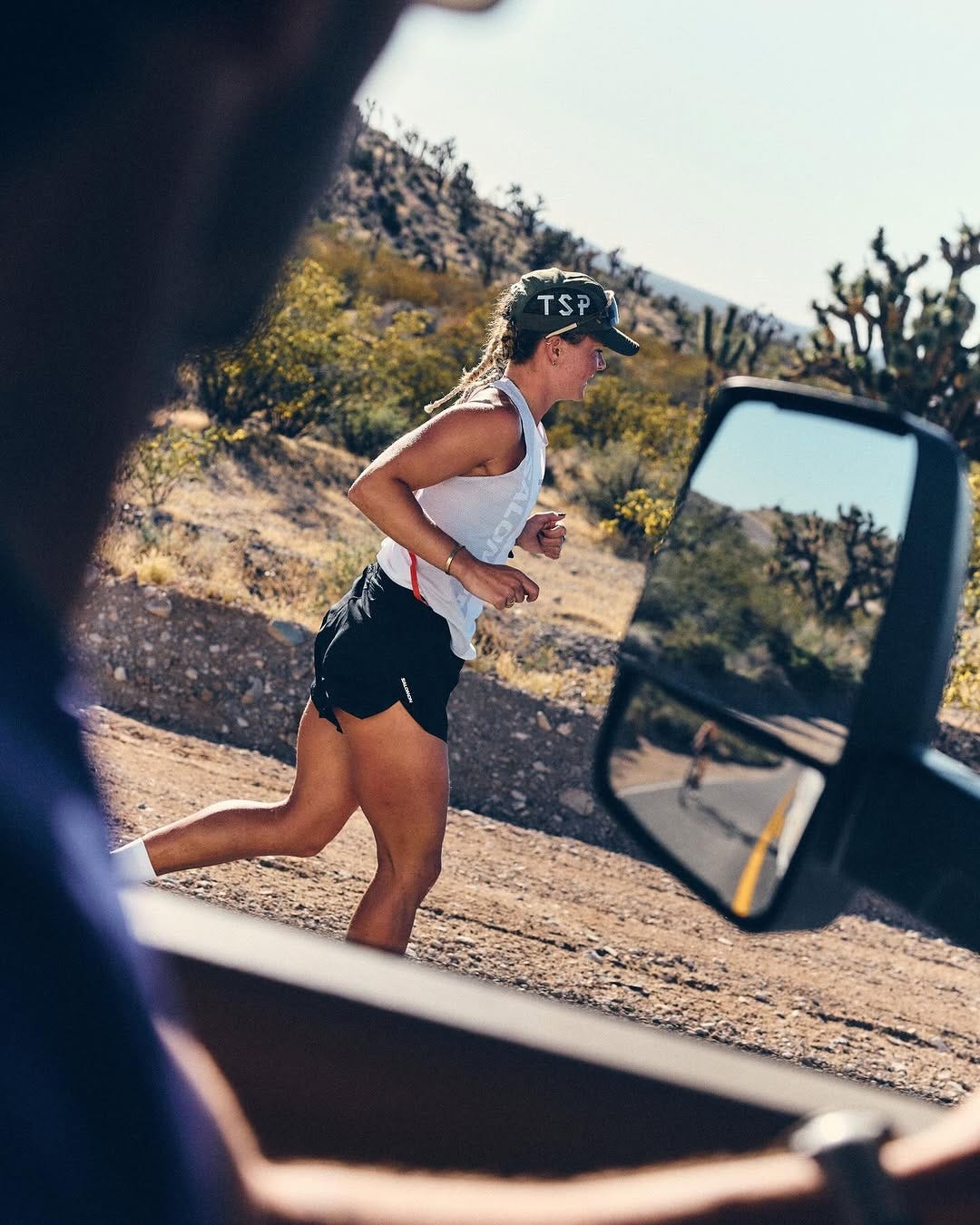
Within the first 200kms, Imo slipped into the top three participants, and the crew started to realise that something crazy could come out of this, leading to a switch of plans and the establishment of a time goal. Tom was there for all of it, camera in hand, though the roles of photographer and boyfriend don’t always sit side by side comfortably. On a few smaller races where he’s been the predominant crew member, one hat or the other has to come off.
“If she’s racing I’m thinking: where’s the person in front, how far until the next checkpoint, all these questions you can’t answer if you’re taking photos.”
TSP, with its bigger crew, gave him more room to be both. He believes his photos get better as the race progresses, almost like when in an endurance event, where the beginning is still uncertain and clunky, and the middle reaches a predictable flow. He claims that it doesn’t all have to do with him, but rather with the nature of the race, as with time, everything gets more interesting. The monotony of one step in front of the other is broken up with more dirt, more exhaustion, and gradual answers to the question of what it actually looks like to push oneself that far.
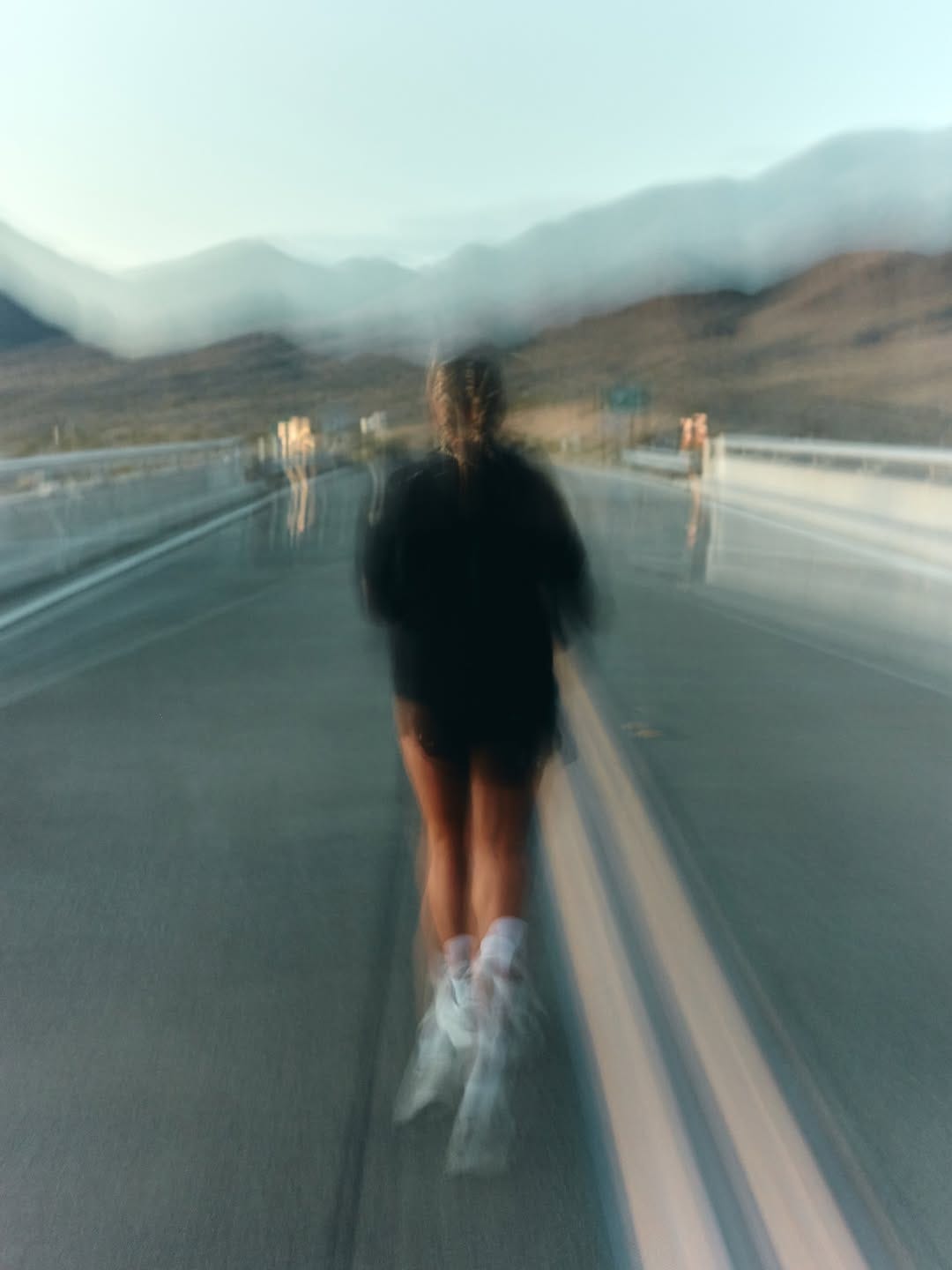
Tom is a runner himself, which helps. The deeper he gets into crewing, the more the outside world falls away, and somewhere in that, the thinking about what to photograph loosens. “You’re able to be a little bit freer and playful and creative. Especially with these events, there always gets to be an element of delirium, and then it’s just, see what happens and see what works.”
But the Powerline section did not lend itself to experimentation. When Imo planned the race with help from the team, they knew about the powerlines but hadn’t quite clocked what they were in for. The dense sand means that a normal caravan can’t get in, and although they had a gravel bike, it still ended up being useless. So Tom ran it with her, carrying as much food and water as possible. It was here that Imo got so exhausted that she’d lie on the dirt to take three-minute naps, asking Tom to wake her up.3
“Just bizarre — absolutely bizarre — in the middle of the desert with just the hum of the power lines and nothing else for miles.”
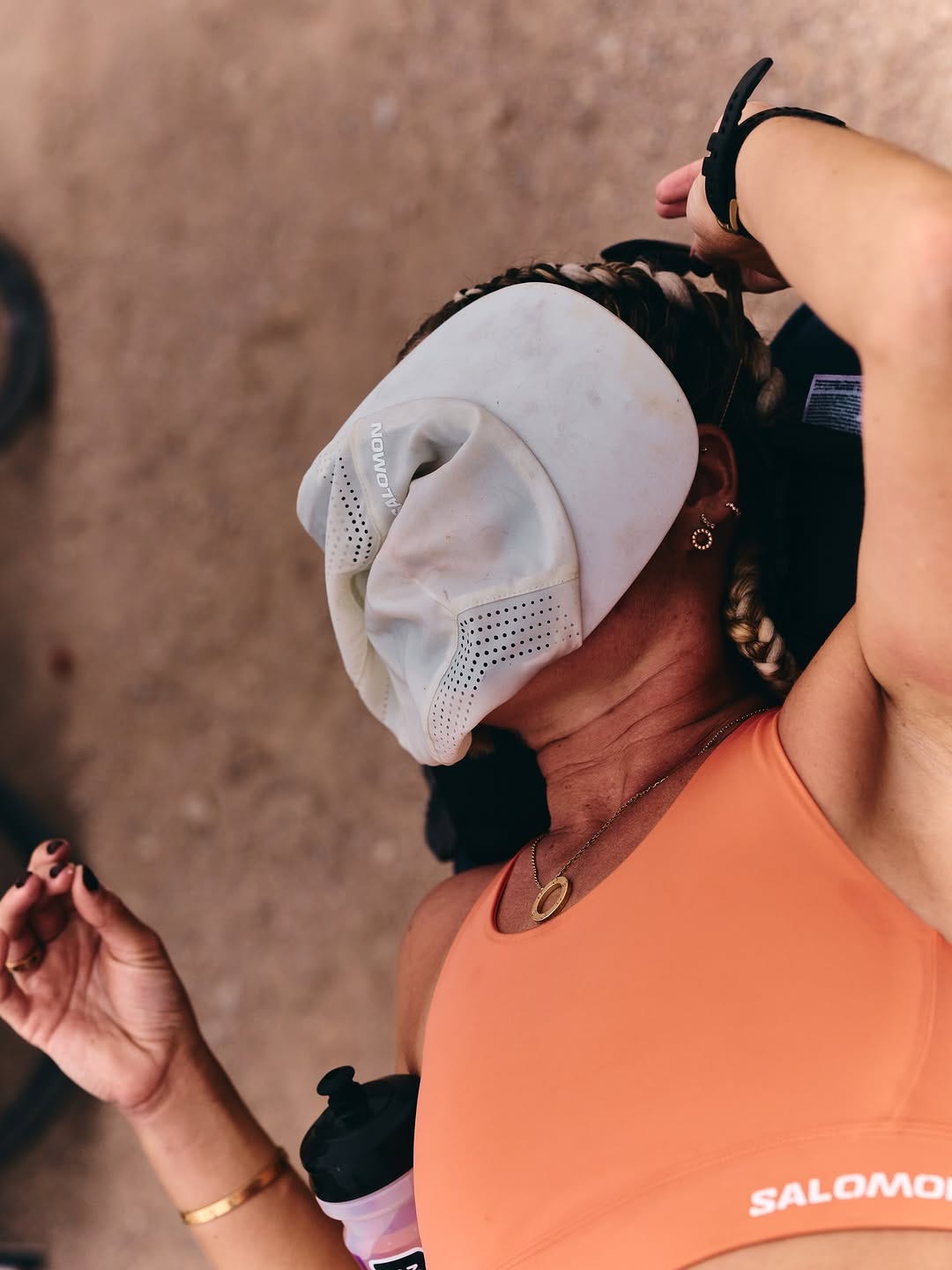
Things took a turn in a 36Km section where Imo started hallucinating and began stumbling rather than running. Tom and another crew member, Johnny, walked on either side of her. She also wasn’t eating, it was too cold to sleep, and they started doing the math on whether to hit SOS on the Garmin.
“You have to remove all emotion. Especially being in a relationship with her. You can’t be worried about it, you need the job hat fully on.”
Eventually, they did manage to get some sustenance in her, she clicked back in and was up and running again. I was surprised to hear that Tom actually did a lot of running with her, keeping her company, and keeping her moving, particularly during the night. To him, creativity and endurance are interlinked, saying that he loves the photography that comes out of events like TSP, because really talented photographers are given creative freedom.
“The outside world becomes kind of optional. All that matters is this little bubble, moving along with the runner. And the less I have to think about things outside of that, the more creative I get.”
To Tom, TSP served as a way to re-establish the concept of authenticity. Imo had a small team, one that, instead of getting caught up in playing the part of a TSP runner, fought to be who they were.
The same happens with the photography, instead of focusing on what would look like a TSP photo, Tom put himself in the images, working to capture the candid moments, and the frames that showed what Imo was going through. The toughest image to capture though was at the finish line, where simplicity in technicality is not enough to outweigh the pressure of only having one shot to commemorate the entire event.
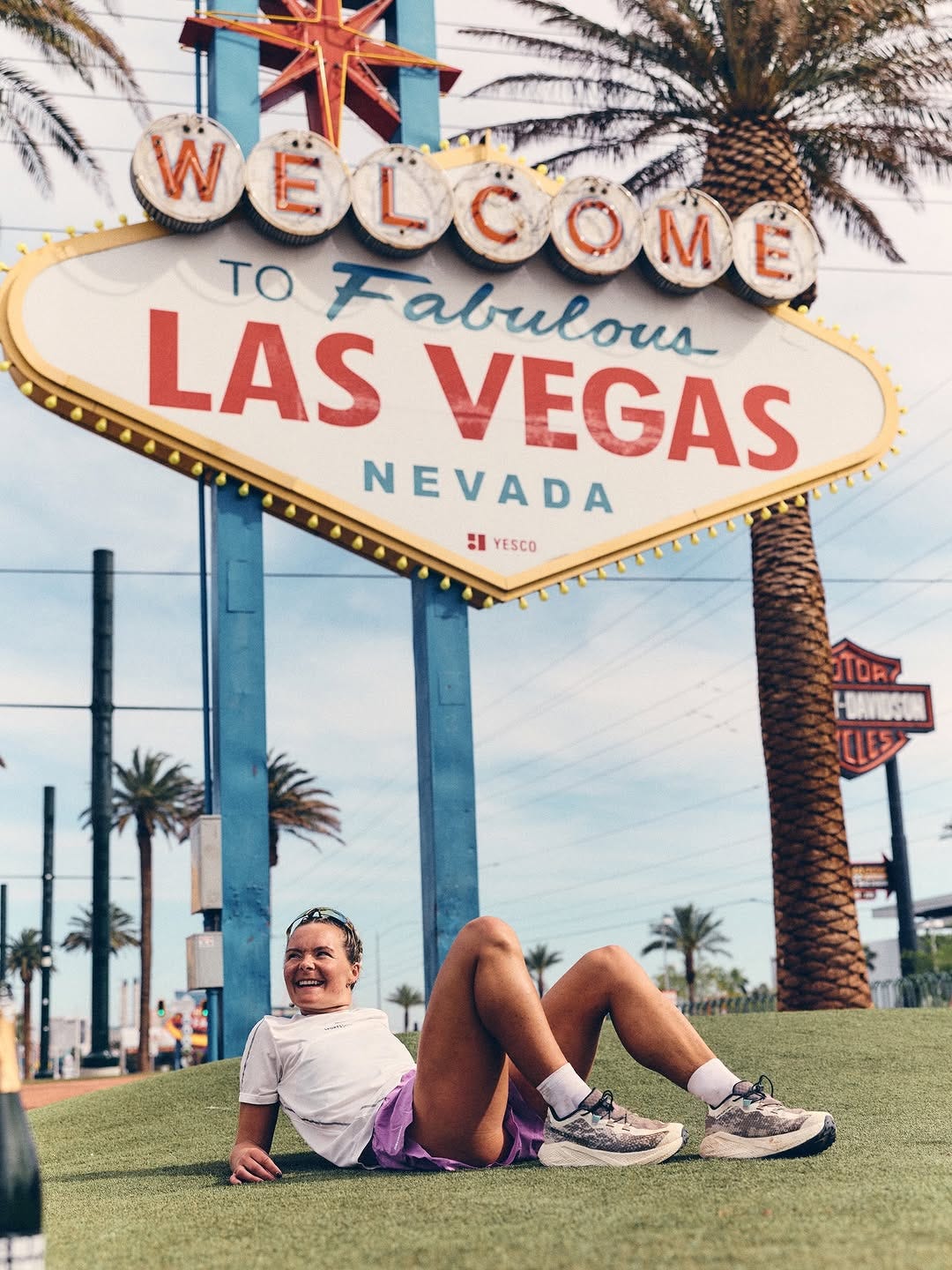
77 hours and 54 minutes after leaving LA, Imo reached Las Vegas, wearing a cardigan, proving that she could already do the hard thing, and Tom Leeming, through his photos showed us what what endurance at that level looks like.
You can find more of Tom Leeming’s great work on Instagram or on his website, and you can follow The Speed Project here.
I found this conversation Nils had with forpeople incredibly insightful
Mapped ahead of the 2019 race by a Nike-sponsored team